When "being inside" does not mean "being part"
You have a student with SEN in the classroom. They have their desk. They have a support teacher. They are present. And yet, something doesn't add up.
During group work, they remain silent. During recess, they stay close to the adult. During tests, they do a different, separate task.
Formally, they are included but are they truly part of the life of the class?
Many professionals feel this tension: we are doing our best, but it is not always enough.
School inclusion: what it really means
We often use "integration" and "inclusion" as synonyms. They are not.
Integration means placing a person into an existing system, asking them to adapt.
School inclusion means modifying the system so that it is accessible to everyone.
It is a subtle but profound difference. It is about rethinking contexts, times, and modes of participation.
From a pedagogical point of view, inclusion is based on three key principles:
- accessibility
- participation
- personalization
It is not a concession. It is a right.
Concrete examples of inclusion (and not just integration)
1. Group work
Integration:
The student with support performs a parallel task with the adult.
Inclusion:
The group receives differentiated roles (who writes, who reads, who looks for images, who organizes ideas).
The task is structured so that everyone can contribute.
The difference is in the design.
2. Written test
Integration:
A completely different, simplified version.
Inclusion:
The same learning objective, different modality (maps, guided answers, supported oral exam).
Do not lower the bar. Make the bar accessible.
3. Recess
Inclusion often stops at academics but social participation is central.
A real-life example: a child who always stays near the teacher during the break.
Inclusive intervention:
- structuring cooperative games
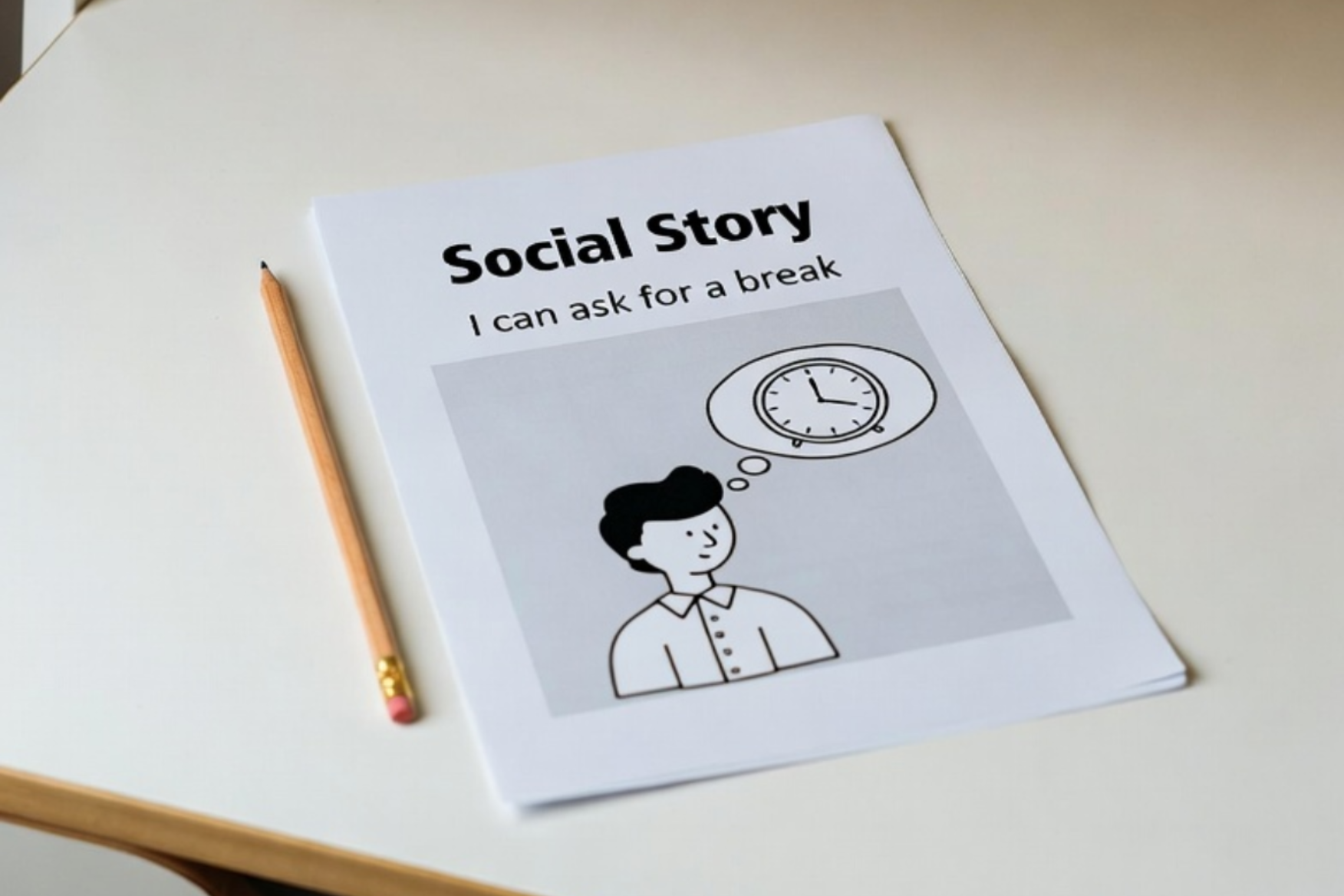
- pre-teaching the rules with a short social story
- creating pairs or small groups with clear roles
Do not force the interaction. Facilitate the context.
Why goodwill is not enough
Many teachers do their best with limited resources. The problem is not individual effort. It is the organizational model.
Inclusion requires:
- collaborative design
- curricular flexibility
- shared culture
- continuous training
It is not the responsibility of a single person.
Shift in perspective: tool, not label
When something is not working, the first question is often: "What are they unable to do?"
Let's try to change it: "What in the context makes participation difficult?"
This question shifts the focus from the deficit to the design.
And this is where inclusive education becomes concrete.
Technology and inclusion: opportunities and limits
Digital tools can promote:
- personalization of materials
- accessibility (text-to-speech, digital maps, visual supports)
- work organization
Artificial intelligence can also help generate differentiated materials quickly. But beware: technology does not create inclusion. It supports those who design inclusion.
The relationship remains the heart.
Conclusion
Real school inclusion is not measured by presence in the classroom but by the quality of participation.
It is not perfect. It is not immediate. It is a process.
And every small change in the context can make a significant difference.
In this direction, tools that support
educational design and personalization can help teachers reduce the gap between presence and participation.
Platforms like
EduStories AI are being used by educators to quickly draft and adapt social stories and narrative supports, helping translate observations into structured, accessible tools for students. However, the effectiveness still depends on professional interpretation, context analysis, and pedagogical intent: technology can support inclusion, but it cannot replace it.
If you are interested in exploring practical tools to support participation, browse the other articles in our blog.