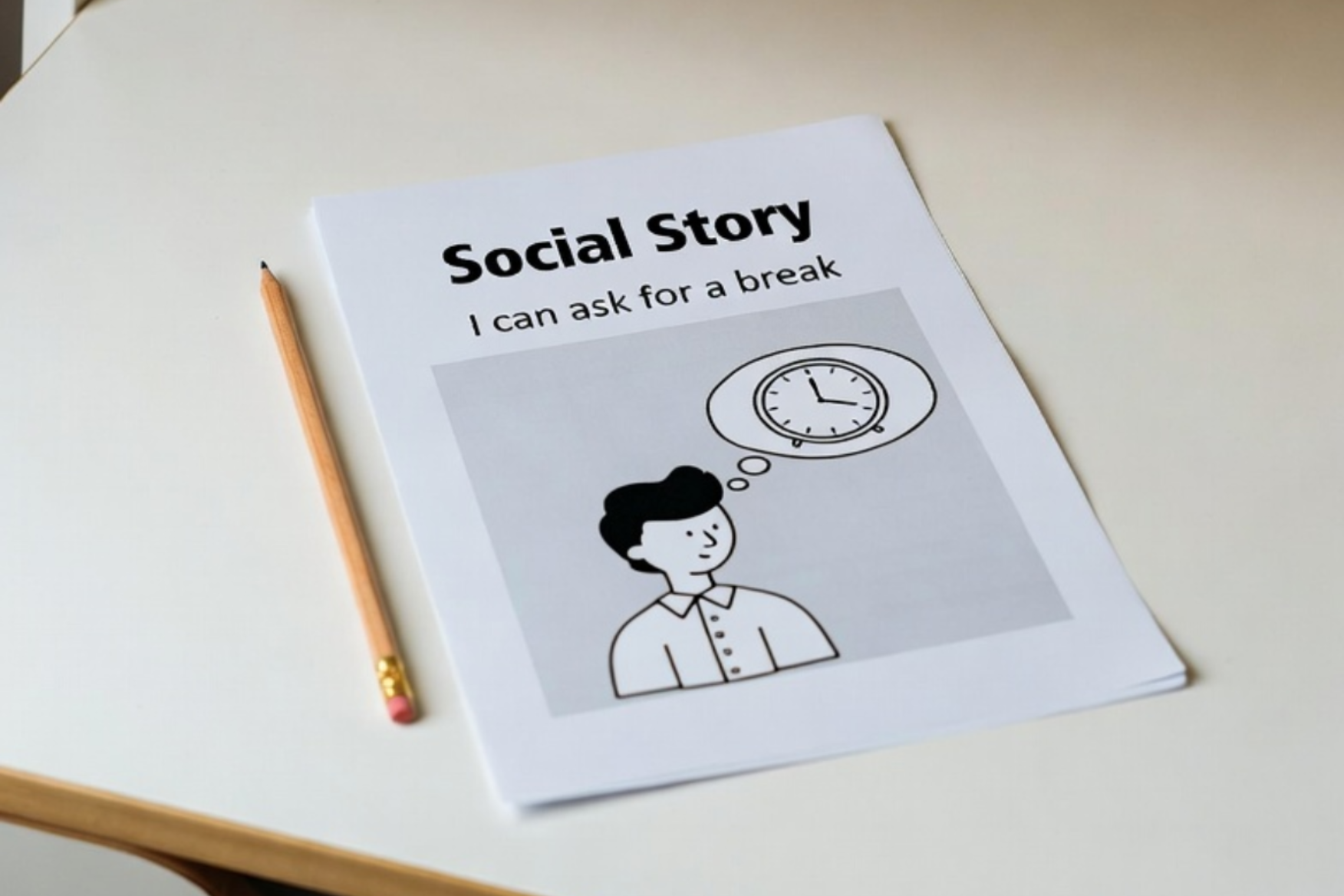

Common Mistakes in Social Stories (and How to Avoid Them)
The most common mistakes in writing social stories and how to avoid them to make them truly effective and personalized.
Many people try Social Stories and later conclude “they didn’t work”. But often the issue isn’t the tool — it’s how the story was written and used. A superficial approach can make the story ineffective, while thoughtful observation and careful writing can turn Social Stories into powerful support tools.
❌ Mistake #1 — Using Stories Only After a Crisis
Social Stories are preventive, not reactive tools.
If written after an emotional outburst, they end up sounding like:
“Here’s what you did wrong”
Instead, Social Stories should be introduced
before the challenging situation to help the person anticipate what will happen and reduce anxiety.
❌ Mistake #2 — Turning Them Into Hidden Rules or Punishment
A Social Story is not:
- A rulebook
- A written punishment
- A list of “do’s and don’ts”
Example of a problematic approach:
- In the cafeteria I must stay seated and not shout.
- I must listen to the teachers.
- I must not disturb others.
When a story is full of “must” statements, it ceases to be a Social Story and becomes a disguised list of rules — increasing anxiety rather than promoting understanding.
❌ Mistake #3 — Not Analyzing the Real Cause of Behavior
Sometimes a behaviour isn’t a social problem, but a reaction to sensory, environmental, or emotional factors.
For example, a child who shouts in the cafeteria might not be “misbehaving,” but responding to:
- Loud noise
- Long waiting times
- Difficulty with certain foods
Better Social Story Example:
In the cafeteria, there are many children.
Sometimes the noise is loud.
Loud noise can make me feel uncomfortable.
I can sit where it’s quieter.
I can cover my ears.
Adults can support me.
In this version, the story recognizes the real sensory cause of the behaviour and suggests supportive strategies.
❌ Mistake #4 — Ignoring Age, Cognitive Level, and Format
A Social Story needs to be tailored to the individual.
For example, a story for a 5-year-old should differ greatly from one for a teenager:
✔ Use simpler language for younger children
✔ Consider visual supports if needed
✔ Adjust length and complexity to suit comprehension
Personalization ensures the story matches the reader’s needs and abilities.
❌ Mistake #5 — Forgetting the Emotional Dimension
Describing what happens isn’t enough — an effective Social Story also includes:
- What the person might feel
- How others might feel
For example:
✔ “Sometimes I feel frustrated when things change”
✔ “Other children might feel excited or anxious”
Including emotional context helps build empathy and self-understanding, making the story more meaningful.
A Shift in Perspective: Not All Challenges Are Social
One key insight from experienced practitioners is that not all difficulties are social in nature. Some challenges commonly mistaken as social issues might actually stem from:
- Sensory overload
- Cognitive fatigue
- Anticipatory anxiety
A well-written Social Story should reflect the real cause of the challenge, not just describe behaviour from the outside.
Conclusion — Review Before You Rewrite
If a Social Story didn’t work, it doesn’t necessarily mean the method failed — it could mean the story needs a second look.
Reflect on whether it:
- Was introduced before the situation
- Focused on understanding, not punishment
- Recognized the real cause of the behaviour
- Was tailored to the individual’s age and level
- Included an emotional perspective
By avoiding common pitfalls, Social Stories can become effective, respectful, and empowering supports for autistic individuals.