
Social Stories for Teens – Practical Guide for Adolescents with Autism
Adapting Social Stories for Teens: Language, Autonomy, Respect, and Personalization
Adolescence is not simply an extension of childhood. It is a developmental phase marked by identity formation, emotional intensity, evolving relationships, and increased expectations for independence. For autistic teens, these transitions may feel overwhelming — especially when social rules become more nuanced and less explicitly stated.
Social stories are often associated with childhood. But adolescents also need tools for social understanding. The difference lies in how.
Social Stories remain valuable during adolescence, but they must evolve. The tone, structure, and intent need to reflect maturity, autonomy, and respect.
Moving Beyond Child-Like Language
One of the most common mistakes when using Social Stories with teens is maintaining a tone that feels too young. Adolescents are highly sensitive to language that sounds patronizing.
When adapting Social Stories for teens:
- Avoid overly simplified or infantilizing phrasing
- Use age-appropriate vocabulary
- Respect the teen’s cognitive and emotional development
- Focus on clarity without oversimplification
The goal is not to “simplify the person,” but to
make the situation understandable while honoring their developmental stage.
Supporting Autonomy Rather Than Compliance
During adolescence, autonomy becomes central. Social Stories for teens should not aim to enforce obedience but to promote informed decision-making.
Instead of directive language such as:
“I must behave appropriately”
“I have to follow the rules”
Use autonomy-supportive phrasing:
“I can choose how to respond”
“I can ask for clarification”
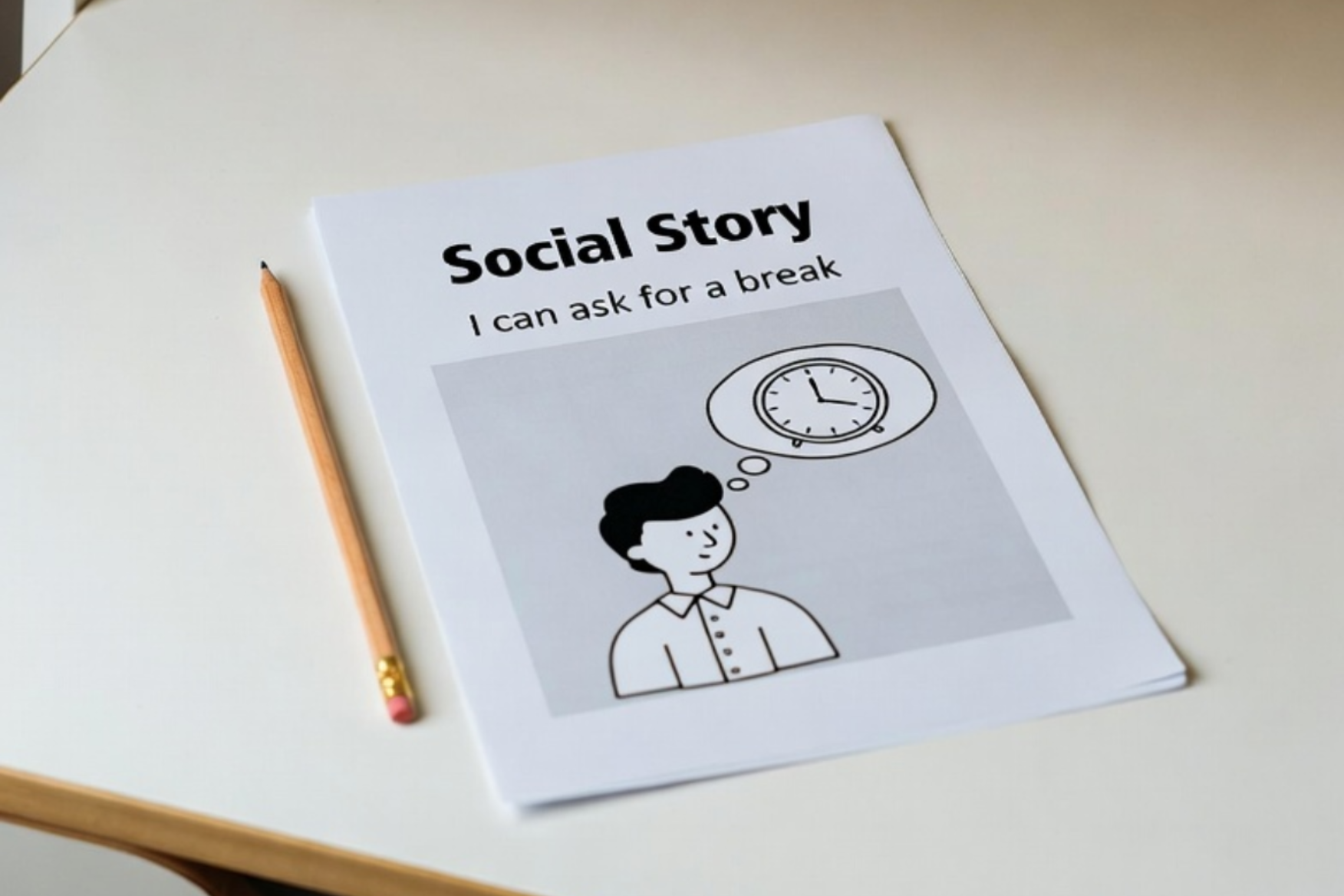
“If I feel overwhelmed, I can take a break”
This shift reinforces self-agency and aligns with the developmental need for independence.
Addressing Complex Social Themes
Teen Social Stories often address topics that require greater sensitivity and nuance, including:
- Friendship dynamics and peer pressure
- Conflict resolution
- Romantic interests and boundaries
- Online communication and digital behavior
- Emotional regulation during hormonal and identity changes
- Transitions to higher education or employment
Stories should describe social expectations clearly while acknowledging emotional complexity. Adolescents benefit from narratives that validate mixed feelings rather than presenting overly simplified solutions.
Respecting Emotional Depth
Teenagers experience emotions intensely. Social Stories should reflect that reality instead of minimizing it.
For example:
I might feel embarrassed if I say something unexpected.
Some classmates may not understand me.
Feeling frustrated does not mean I did something wrong.
I can decide how much I want to explain.
This approach normalizes emotional experience and reduces shame, which is particularly important during identity formation.
Personalization Is Essential
A generic Social Story is rarely effective for adolescents. Personalization should include:
- The teen’s real environment
- Their communication style
- Their sensory profile
- Their goals and interests
- Their preferred coping strategies
Whenever possible, involve the teen in creating or reviewing the story. Collaboration increases ownership and relevance.
Example — Attending a Group Project Meeting
Sample Social Story for a Teen:
Tomorrow we will meet to work on the group project.
Each person may have different ideas.
Sometimes people talk at the same time.
I might feel impatient or unsure when to speak.
I can wait for a pause and share my idea.
If I feel overwhelmed, I can ask to step out briefly.
Contributing in my own way is valuable.
This example emphasizes autonomy, emotional awareness, and respectful participation rather than compliance.
Practical Guidelines for Adapting Social Stories for Teens
- Use respectful, age-appropriate language
- Focus on understanding rather than correction
- Offer choices instead of commands
- Acknowledge emotional nuance
- Encourage collaboration in story creation
- Introduce stories proactively, not reactively
When adapted thoughtfully, Social Stories continue to be effective tools throughout adolescence.
Conclusion — From Guidance to Partnership
Adapting Social Stories for teens means shifting from instruction to partnership. Language becomes more respectful, strategies more autonomy-focused, and narratives more personalized.
When teens feel understood rather than managed, Social Stories transform from behavioral tools into meaningful supports that foster confidence, self-advocacy, and independence.