
Social Stories: The Power of Words in Building Understanding and Autonomy in Children with Autism

When language doesn’t control behavior — it creates safety, meaning, and potential


Words aren’t neutral: they can either increase anxiety or bring clarity. For many autistic children, language directly affects emotional regulation, understanding expectations, and sense of safety. This article explains why Social Stories work through the way they use words, how descriptive language builds autonomy, and what evidence supports this approach.

Language as Experience, Not Instruction


Traditional educational or behavioral approaches often rely on phrases such as:

  • “You must wait here”
  • “Don’t do that”
  • “If you don’t listen, this will happen”


For many autistic children, these expressions don’t clarify expectations and may increase uncertainty or trigger emotional stress. Instead, Social Stories aim to:

👉 shift language from a tool of control to a tool of orientation and understanding.


They focus on:

  • What is happening
  • What is predictable
  • What can help the child feel safe or better

Why Words Matter in Autism


From a cognitive perspective, many autistic individuals:

  • Experience heightened sensitivity to uncertainty
  • Struggle with implicit social rules
  • Carry a higher cognitive load in social contexts


Vague, emotional, or directive language often increases this load. In contrast, descriptive, literal, predictable language reduces uncertainty and helps build mental maps of social expectations and experiences.

The Power of Descriptive Language


Carol Gray, the creator of Social Stories, emphasizes that effective social narratives are descriptive, not corrective. This means using statements such as:

      ✔ “Sometimes people need to wait their turn.”

      ✔ “Waiting can make my body feel tense.”

      ✔ “There are things I can do while I wait.”


These phrases share information without judgment, urgency, or threat. They create an emotionally safe map of experience, not a set of instructions.

Research Support for Social Stories


Studies suggest Social Stories are most effective when:

  • The language is neutral and non-prescriptive
  • The goal is understanding, not obedience
  • The story is read in calm, supportive contexts


Social Stories help autistic children learn what to expect, which reduces stress and increases confidence and autonomy.

Practical Example: How Words Can Change Response


❌ Common directive language:

     “Don’t get angry.”

     “Calm down right away.”


✅ Social Story language:

     “Sometimes I feel angry.”

     “Anger is a strong feeling in my body.”

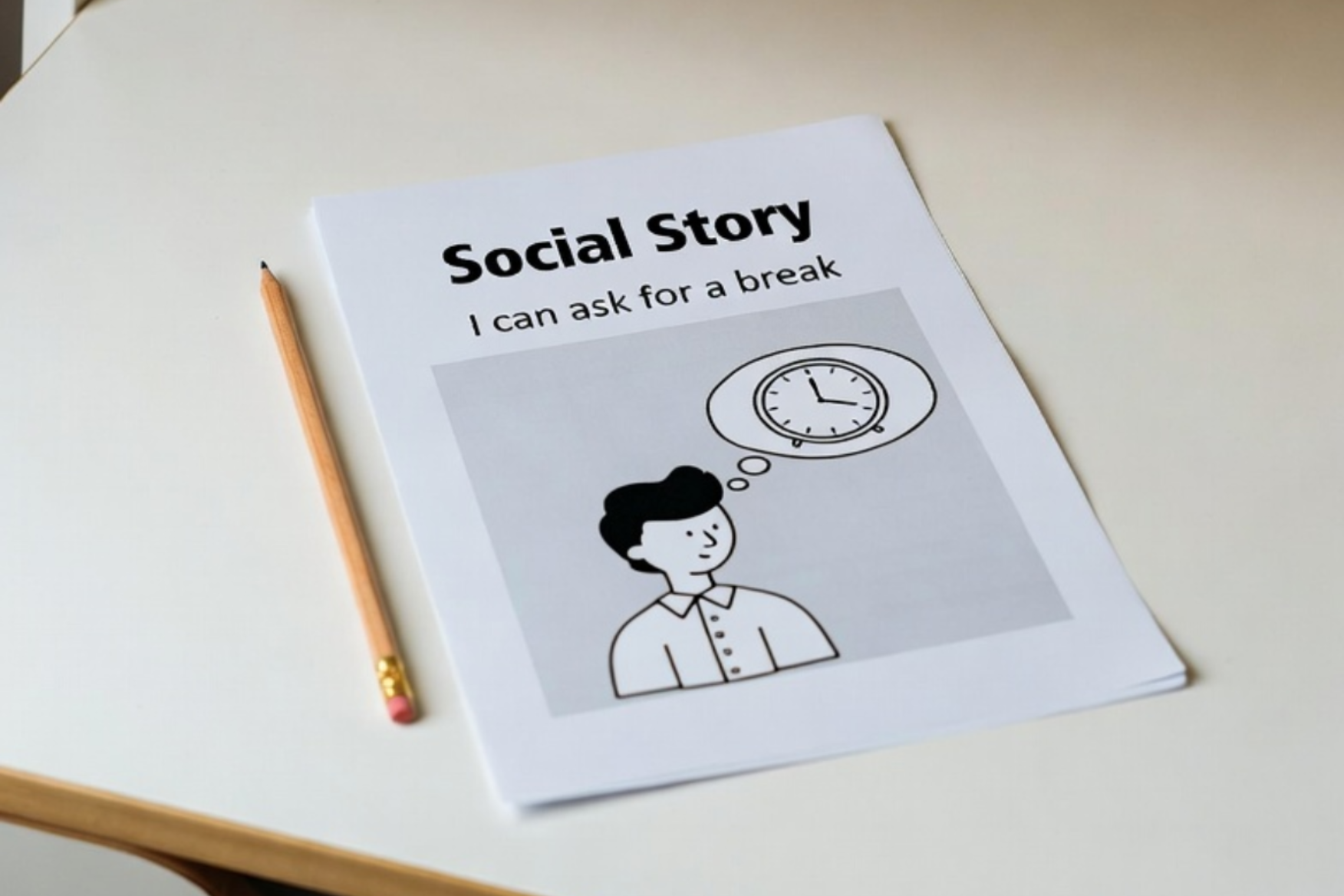
     “When I feel angry, I can take a break or ask for help.”


Here, the language doesn’t suppress emotion — it makes it understandable and manageable.

What Autonomy Really Means


Autonomy isn’t “doing everything alone.” It grows from:

  • Clear information
  • Predictable expectations
  • Support that doesn’t force a child to decode everything unaided


Social Stories don’t replace skills; they make them usable in real moments.

How to Use Social Stories Effectively


Use them with intention:

✔ Write to explain, not correct

✔ Introduce before anxiety-provoking situations

✔ Keep sentences short, literal, and concrete

✔ Read repeatedly during calm moments

✔ Treat them as conversation, not rigid rules

Conclusion — Language That Builds Meaning


Social Stories aren’t about teaching the “right behavior.” They work because they use words to construct meaning. When a child understands:

  • what is happening
  • why it happens
  • what they can do


…anxiety decreases, confidence grows, and autonomy becomes possible.


Share this article

Read other posts

EduStories — educational content on autism and neurodiversity
April 15, 2026
What are Social Stories, how do they work for autism, and when should you use them? A complete guide with practical examples, updated research, and advice for parents and teachers.
Real School Inclusion: What It Really Means and Why It's Not Enough “Staying in the Classroom”
March 2, 2026
What does school inclusion really mean? Discover the difference between integration and inclusion, with concrete examples and strategies for a truly accessible school.
Special Educational Needs: What It Really Means and How to Avoid Superficial Use
March 2, 2026
What does special educational needs (SEN) really mean? A clear guide to avoiding superficial labels and designing truly inclusive interventions.
Educational Accessibility: How to Design Inclusive Lessons from the Start
March 2, 2026
Learn how to design inclusive and accessible lessons from the start, with concrete examples for primary and secondary school.
How to Organize the Creation of Social Stories at School (Without Adding Extra Workload)
March 2, 2026
Learn how to organize the creation of social stories at school in a sustainable way, with practical strategies for teachers and educators.
Managing a Behavioural Challenge at School: Operational Strategies Before, During, and After
March 2, 2026
A practical guide to managing a behavioral crisis at school with preventive strategies and concrete interventions, respecting the student and the context.
AI and social stories: how to use it ethically and consciously in educational practice
February 23, 2026
Learn how to use AI in creating social stories ethically, consciously, and professionally. A practical guide for educators and therapists.
Digital tools for creating social stories: advantages, limitations, and selection criteria
February 16, 2026
What digital tools should you choose to create effective social stories? Practical analysis of advantages, limitations, and criteria for educators and therapists.
Personalizing Social Stories with AI – real opportunities and concrete limitations
February 9, 2026
Is personalizing social stories with AI really effective? Concrete analysis of opportunities, limitations, and best practices for educators.
Social Stories for Teens – Adapting Language, Autonomy and Personalization
February 2, 2026
Learn how to adapt Social Stories for teens with autism using respectful language, autonomy-focused strategies, and personalized narratives that support emotional regulation and social understanding.
Show More