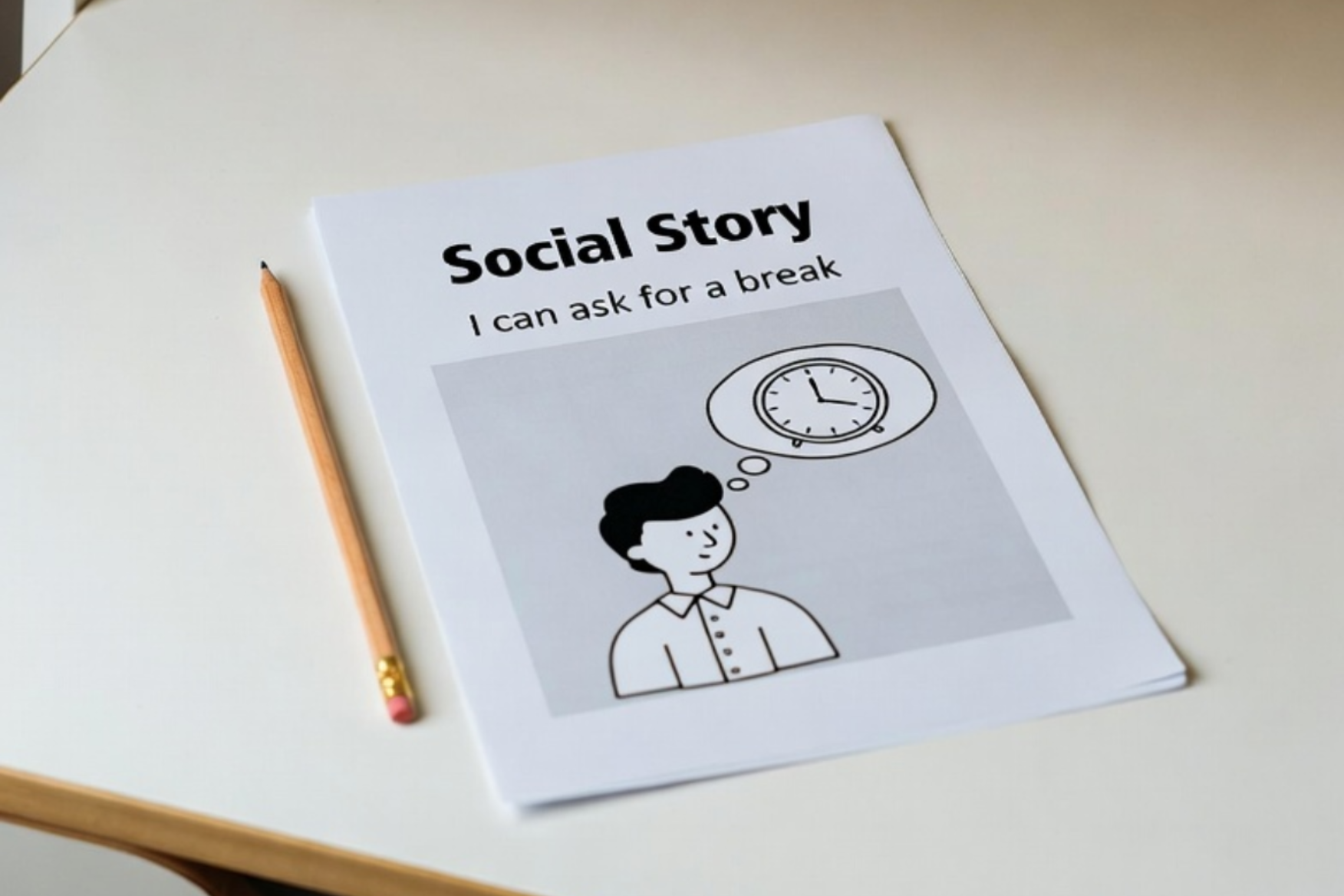

Social Stories: What They Really Are and Why They Work (Beyond Definitions)

Clear Tools for Understanding and Reducing Uncertainty

Social Stories are short, personalized narratives designed to help children and young people — especially those on the autism spectrum or with special educational needs — to make sense of social situations, reduce anxiety, and develop self-regulation strategies. This article explains in simple terms what Social Stories are, why they work, and offers practical examples and tips

What Are Social Stories?


Social Stories are brief narratives that describe a social experience or situation in a simple, predictable, and non-judgmental way. They were originally developed in the 1990s by Carol Gray and were intended primarily for autistic children, but today they are also used with individuals with ADHD, learning differences, emotional and behavioural needs.


Unlike typical stories or rules, Social Stories don’t impose behavior or say “you must do this.” Instead, they:

  • Explain what happens
  • Clarify why it happens
  • Offer possible responses without pressure


This makes them tools for understanding, not obedience.

Why Social Stories Work


Many children and young people with special needs find it challenging to:

  • Predict what will happen next
  • Interpret the intentions of others
  • Manage uncertainty
  • Understand implicit social rules


Social Stories help by reducing unpredictability, making invisible rules explicit, lowering anxiety, and providing a possible response model.


These outcomes align with established understanding about how clear, structured language can support autistic learners to navigate social expectations and anxiety-provoking contexts.

Practical Example: Recess

A Typical Instruction


     ❌ “You must play nicely and not get angry”

This is too vague and directive, often increasing stress.


Social Story Version

    “At school there is a time called recess.

     Many children want to use the same toys.

     Sometimes I have to wait my turn.

     Waiting can be hard.

     I can ask, ‘When am I next?’

     Adults can help me”


Here the story describes, empathizes, and offers strategies — without commanding behaviour.

Practical Example: Doctor’s Visit


    “Tomorrow I’ll go to the doctor.

     The doctor checks how my body is growing.

     The doctor may use a cold tool on my chest.

     Sometimes I may wait in the waiting room.

     If I feel nervous, I can hold something I like.

     The visit will be short, and then we go home”


This example reduces uncertainty and prepares the child for sensory and emotional aspects of the visit.

Common Mistakes When Creating Social Stories

  • Using them as disciplinary tools — they are not for obedience.
  • Writing stories that are too generic or abstract.
  • Failing to personalize for the child’s age, language level, or real context.
  • Using them only after a problem has occurred — they are most effective when preventive

How to Create Effective Social Stories

When crafting Social Stories, consider evidence-based best practices:

1. Use Clear, Concrete Language

Avoid abstract or overly complex sentences.


2. Include Visuals

Pictures, symbols, or simple illustrations help reinforce text understanding, especially for visual learners.


3. Write From First–Person or Relevant Perspective

Use “I” or third person to describe both the child’s experience and relevant social cues.


4. Focus on What Happens, Not What Should Happen

Describe the situation factually before offering possible child responses.


5. Review and Personalize

Check the story with caregivers and revise as needed to ensure it matches the child’s experience and comprehension level.


6. Introduce at the Right Time

Read the Social Story with the child in calm moments, especially before the event or situation it describes.

Conclusion — Stories That Build Understanding


Social Stories don’t fix everything, nor do they eliminate every difficulty. But when used thoughtfully and tailored to the individual, they can create a bridge between implicit expectations and clear understanding. They empower children to navigate social experiences with more predictability and less anxiety.

Share this article

Read other posts

EduStories — educational content on autism and neurodiversity
April 15, 2026
What are Social Stories, how do they work for autism, and when should you use them? A complete guide with practical examples, updated research, and advice for parents and teachers.
Real School Inclusion: What It Really Means and Why It's Not Enough “Staying in the Classroom”
March 2, 2026
What does school inclusion really mean? Discover the difference between integration and inclusion, with concrete examples and strategies for a truly accessible school.
Special Educational Needs: What It Really Means and How to Avoid Superficial Use
March 2, 2026
What does special educational needs (SEN) really mean? A clear guide to avoiding superficial labels and designing truly inclusive interventions.
Educational Accessibility: How to Design Inclusive Lessons from the Start
March 2, 2026
Learn how to design inclusive and accessible lessons from the start, with concrete examples for primary and secondary school.
How to Organize the Creation of Social Stories at School (Without Adding Extra Workload)
March 2, 2026
Learn how to organize the creation of social stories at school in a sustainable way, with practical strategies for teachers and educators.
Managing a Behavioural Challenge at School: Operational Strategies Before, During, and After
March 2, 2026
A practical guide to managing a behavioral crisis at school with preventive strategies and concrete interventions, respecting the student and the context.
AI and social stories: how to use it ethically and consciously in educational practice
February 23, 2026
Learn how to use AI in creating social stories ethically, consciously, and professionally. A practical guide for educators and therapists.
Digital tools for creating social stories: advantages, limitations, and selection criteria
February 16, 2026
What digital tools should you choose to create effective social stories? Practical analysis of advantages, limitations, and criteria for educators and therapists.
Personalizing Social Stories with AI – real opportunities and concrete limitations
February 9, 2026
Is personalizing social stories with AI really effective? Concrete analysis of opportunities, limitations, and best practices for educators.
Social Stories for Teens – Adapting Language, Autonomy and Personalization
February 2, 2026
Learn how to adapt Social Stories for teens with autism using respectful language, autonomy-focused strategies, and personalized narratives that support emotional regulation and social understanding.
Show More